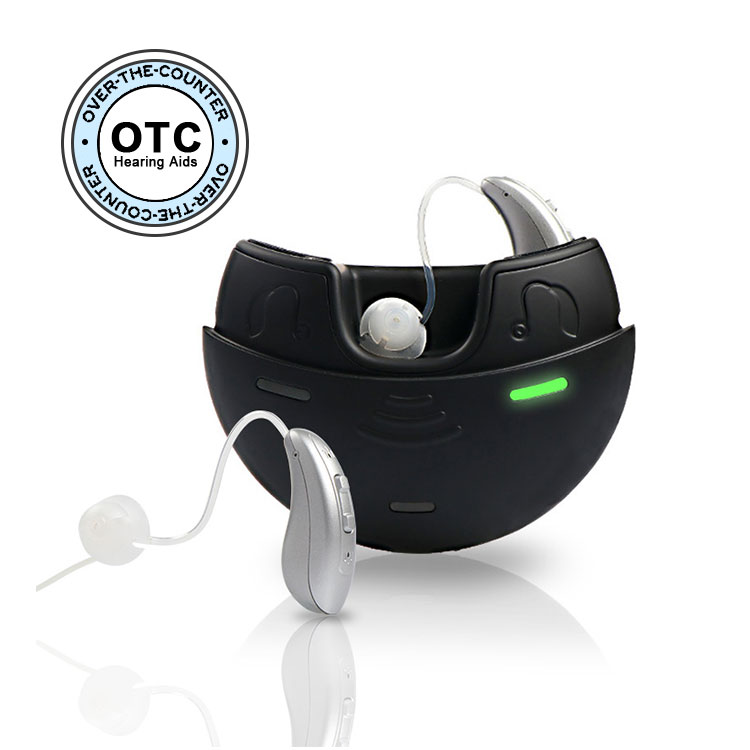
Hearing loss in children is a critical developmental concern, with the Centers for Disease Control and Prevention (CDC) reporting that approximately 1.7 per 1,000 babies are identified with a permanent hearing loss through newborn screenings. For these children, early intervention is paramount, and the BTE hearing aid remains the clinical gold standard. Unlike adult users who may prioritize cosmetics, pediatric audiology prioritizes durability, power, and adaptability—areas where Behind-the-Ear (BTE) models excel.
The Safety and Durability of BTE Hearing Aids for Active Children
One of the primary reasons BTE hearing aids are recommended for pediatric use is their physical resilience. Children engage in high-energy play, sports, and school activities that place significant stress on medical devices. Unlike In-the-Ear (ITE) models, which are housed in fragile custom shells that fit deep in the canal, BTE devices are constructed from high-impact, medical-grade plastics designed to withstand drops and moisture.
Market data underscores this preference: BTE hearing aids represent 61% of global unit sales in the pediatric sector, largely due to their “tamper-proof” features. Leading manufacturers like JINGHAO ensure their pediatric-friendly BTE models, such as the JH-D26, feature locked battery compartments and reinforced ear hooks. These safety measures prevent young children from accidentally removing or swallowing small zinc-air batteries, a critical safety factor for parents and daycare providers.
Growth Adaptability and Precision Fitting
A child’s ear canal changes shape and size rapidly during the first decade of life. If a child were to use an ITE device, the entire electronic unit would need to be remanufactured every few months to maintain a proper seal. In contrast, BTE hearing aids utilize a modular design.
Cost-Effective Maintenance: Only the earmold—a relatively inexpensive plastic piece—needs to be replaced as the child grows. The expensive electronic “brain” housed behind the ear remains the same.
Acoustic Integrity: A secure fit is vital for preventing feedback (whistling). BTE models offer superior venting options and earmold materials (like soft silicone) that provide a comfortable, airtight seal, even as the child’s physiology changes.
High-Power Output: Statistics show that roughly 38% of pediatric hearing loss cases are classified as profound. BTE devices are the only non-implantable solution capable of providing the high-gain amplification (often exceeding 70dB–80dB) required for severe impairments.
Educational Benefits: Bluetooth Connectivity and FM Systems
Academic achievement in the classroom is closely linked to a student’s capacity to clearly understand their teacher amidst surrounding noise. Research published in *The Journal of Speech, Language, and Hearing Research* provides compelling evidence: children using extended-bandwidth behind-the-ear hearing devices demonstrated a measurable 5.4% improvement in consonant discrimination in noisy settings when compared to those using restricted-bandwidth models. This finding underscores the significant role that technological bandwidth plays in enhancing auditory clarity. By enabling more accurate speech perception, these advanced devices help ensure students can fully access verbal instructions and educational content, thereby supporting their comprehension, engagement, and long-term academic success.
Modern BTE hearing aids integrate advanced digital features specifically designed for the classroom:
FM System Compatibility: Many BTE models feature a “Direct Audio Input” or telecoil that allows them to connect to FM systems used by teachers. This streams the teacher’s voice directly into the child’s hearing aid, bypassing ambient noise.
Digital Signal Processing (DSP): Professional BTE units utilize 16-channel WDRC (Wide Dynamic Range Compression) and active noise reduction. These chips prioritize the 500Hz to 4000Hz frequency range—the “speech zone”—ensuring that the child captures the subtle phonemes necessary for language development.
Bluetooth 5.0 Integration: As children enter middle and high school, connectivity becomes a social and educational bridge. Devices like the JH-W3 allow for seamless streaming from tablets and smartphones, facilitating participation in digital learning modules.
Long-Term Developmental Statistics and Outcomes
The “why” behind the clinical preference for BTE technology is found in long-term outcomes. Research indicates that consistent use of high-quality amplification before the age of six months leads to significantly better language development.
| Metric | Children with Early BTE Intervention | Children with Late/No Intervention |
| Vocabulary Scores | Within average range for age | Significantly below peers |
| Academic Retention | Higher rates of grade-level completion | 33%–50% risk of repeating a grade |
| Social Interaction | Higher engagement in group play | Increased risk of social isolation |
Furthermore, the prevalence of hearing loss increases as children age, reaching 15.2% among adolescents (ages 12-19) due to environmental noise and ear infections. The versatility of the BTE platform allows it to be reprogrammed via software as the user’s audiogram shifts, providing a “future-proof” solution that grows with the student.
A Strategic Choice for Pediatric Care
For medical distributors and audiology clinics, providing BTE hearing aids for children is a decision rooted in safety, power, and educational support. With specialized features like IPX6 water resistance, 16-80dB gain ranges, and rechargeable lithium-ion batteries that provide 18+ hours of use, BTE technology addresses the specific lifestyle needs of young users. By choosing BTE models from established manufacturers like JINGHAO, providers ensure that children have the robust tools they need to meet every developmental milestone with confidence.
