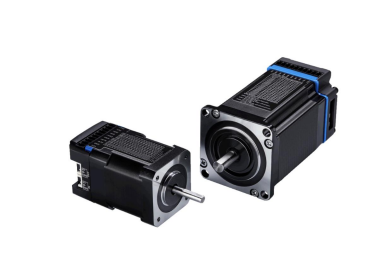
The relentless drive for greater efficiency, precision, and reliability in manufacturing has necessitated continuous evolution in motion control technologies. While traditional open-loop stepper systems have served admirably for decades, their inherent limitations become apparent in high-stakes, modern automation environments. This is where the closed loop stepper has ascended to a position of critical importance. A complete closed loop stepper system, comprising a motor with an integrated encoder and a specialized drive with feedback control, offers a transformative combination of stepper motor simplicity and servo-like assurance. For automation engineers and machine builders, understanding why this technology is vital extends beyond mere performance specs; it directly impacts machine uptime, product quality, and total cost of ownership. Companies like Leadshine are at the forefront of this shift, providing robust and economical closed loop stepper systems that address the core demands of contemporary industrial applications.
Ensuring Uncompromising Reliability and Process Integrity
Perhaps the single most important contribution of a closed loop stepper system to automation is the elimination of step loss. In an open-loop system, the controller assumes the motor follows every pulse command. If the motor encounters an unexpected load increase, inertia mismatch, or resonance, it can stall or lose steps, leading to a positional error that the system cannot detect or correct. This undiscovered error can ruin a workpiece, cause a machine crash, or lead to defective batches. A closed loop stepper actively prevents this. By continuously comparing the motor’s actual position (via encoder feedback) with the commanded position, the drive instantly detects any deviation. As described in Leadshine’s CS Series documentation, the system provides “No loss of step” by dynamically adjusting current to correct the position. This built-in verification ensures process integrity, which is indispensable in unattended operations, high-value part manufacturing, or processes where rework is costly. The reliability of the entire automated cell is therefore significantly enhanced by adopting a closed loop stepper system.
Enhancing Precision and Consistency Across Dynamic Conditions
Automation equipment must perform consistently, not only under ideal conditions but also as loads vary, temperatures change, or mechanics wear. The feedback mechanism in a closed loop stepper system makes it inherently adaptive. It ensures consistent positioning accuracy regardless of load fluctuations within the motor’s torque capability. For example, a machine placing components onto PCBs must maintain micron-level precision whether placing a small chip or a larger connector. Leadshine’s closed loop technology, with features like “No hunting” and “No torque reservation,” ensures smooth, stable motion that translates directly into higher product quality and repeatability.
Improving Energy Efficiency and Thermal Management
Open-loop stepper systems often run at a fixed, high current to ensure there is enough torque margin to handle potential load spikes. This results in continuous high power consumption and significant motor heating, which can shorten motor life and require additional cooling. A closed loop stepper system operates more intelligently. The drive supplies only the current necessary to achieve and maintain the commanded motion based on real-time load feedback. This dynamic current adjustment leads to substantially lower power consumption and, as highlighted in Leadshine’s materials, results in “lower heating” of the motor. Improved thermal management extends the lifespan of the motor and allows for higher duty cycles or more compact machine designs without external cooling fans. This energy efficiency is not only an economic advantage but also aligns with the growing emphasis on sustainable and thermally stable automation solutions.
Enabling Advanced Diagnostics and Simplified System Architecture
The intelligence of a closed loop stepper system provides valuable diagnostic capabilities that are absent in open-loop setups. The drive can monitor parameters like following error, encoder health, and system status. Leadshine’s CS2RS and CS3E Series drives provids clear fault indicators that simplify troubleshooting and preventive maintenance. This proactive diagnostic ability minimizes unplanned downtime. Additionally, modern closed loop stepper systems often incorporate sophisticated onboard functionality. Leadshine’s drives feature internal multi-segment position tables (PR mode), enabling complex sequences to be stored and executed directly by the drive. This can dramatically simplify the overall control architecture by reducing the programming burden on the central PLC or controller, effectively creating a distributed, intelligent motion network that is both powerful and cost-effective.
Providing a Cost-Effective Bridge Between Stepper and Servo Performance
The importance of the closed loop stepper is also economic. It delivers a performance level that closely rivals that of a servo system—high torque, high accuracy, and dynamic response—but often at a lower total system cost. For a vast segment of automation applications where the extreme high-speed dynamics of a servo are not required, a closed loop stepper system presents the optimal solution. It allows machine builders to design more capable and reliable equipment without escalating to the higher price point of servos for every axis. Leadshine has strategically positioned its closed loop stepper system portfolio, such as the CS3E (EtherCAT) and CS2RS (Modbus) families, to serve this exact market need. Their systems excel in applications like packaging, textile, robotics, and general automation, as noted in their product briefs, proving that this technology is not a niche product but a mainstream solution for enhancing machine performance economically.
In conclusion, the importance of closed loop stepper technology in modern automation is multifaceted and profound. It directly addresses the critical industrial needs of guaranteed reliability, enhanced precision, improved energy efficiency, and intelligent diagnostics. By moving from an assumption-based to a verification-based control paradigm, a closed loop stepper system injects a new level of confidence and capability into automated machinery. As demonstrated by Leadshine’s comprehensive product offerings, this technology represents a pragmatic and powerful evolution in motion control, enabling manufacturers worldwide to build smarter, more reliable, and more competitive automated systems.
