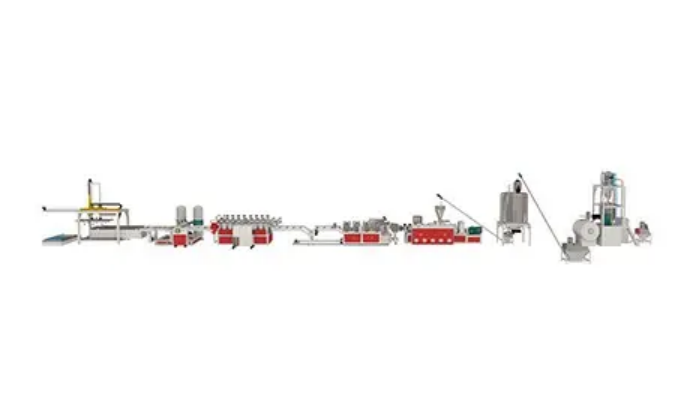
In the manufacturing of high-density cellular PVC, mechanical stability is a prerequisite for achieving a superior surface finish. As a PVC foam board production line operates, the rotation of the twin screws and the movement of the heavy-duty calibration units generate kinetic energy that, if left unmanaged, results in “chatter marks” or internal structural micro-fissures. For B2B manufacturers producing boards for the architectural or advertising sectors, understanding how to measure and mitigate these vibrations is essential for maintaining a high-speed, 24-hour output.
The Physics of Vibration in Extrusion
Vibration in a PVC foam board extrusion line is typically measured using three primary metrics: displacement, velocity, and acceleration. Industrial-grade accelerometers are placed at critical nodes—specifically the gearbox housing and the main motor bearings—to detect harmonic resonance. When the extrusion speed reaches a certain threshold, the frequency of the rotating screws can align with the natural frequency of the machine frame, leading to amplified oscillations.
These vibrations are particularly detrimental during the foaming phase. Because the PVC melt is in a semi-liquid state as it enters the T-die, even minor mechanical shudders can cause thickness fluctuations or uneven cell distribution. By utilizing Fast Fourier Transform (FFT) analyzers, plant engineers can decompose complex vibrations into individual frequencies, allowing them to identify whether a disturbance is caused by a misaligned coupling, a worn bearing, or an imbalanced screw.
Structural Integrity and Stability by Boyu
For global enterprises requiring consistent industrial performance, the structural design of the machinery is the first line of defense. Boyu engineers their PVC foam board production line with a heavy-duty, reinforced steel base that provides a high damping ratio, effectively absorbing low-frequency energy. Their systems, such as the SJSZ-92/188, are built to handle the immense torque required for high-output 550kg/h cycles.
By incorporating premium transmission components from trusted brands, they ensure that their PVC foam board extrusion line operates with minimal mechanical noise. Their engineering focus extends to the precision balancing of the conical twin screws, which are treated for high wear resistance to maintain their center of gravity over long-term use. For B2B clients, their commitment to these technical standards ensures a stable production environment that protects the T-die and calibration units from premature wear. Through these robust mechanical solutions, they provide their partners with a reliable platform for producing world-class PVC foam boards with impeccable dimensional stability.
