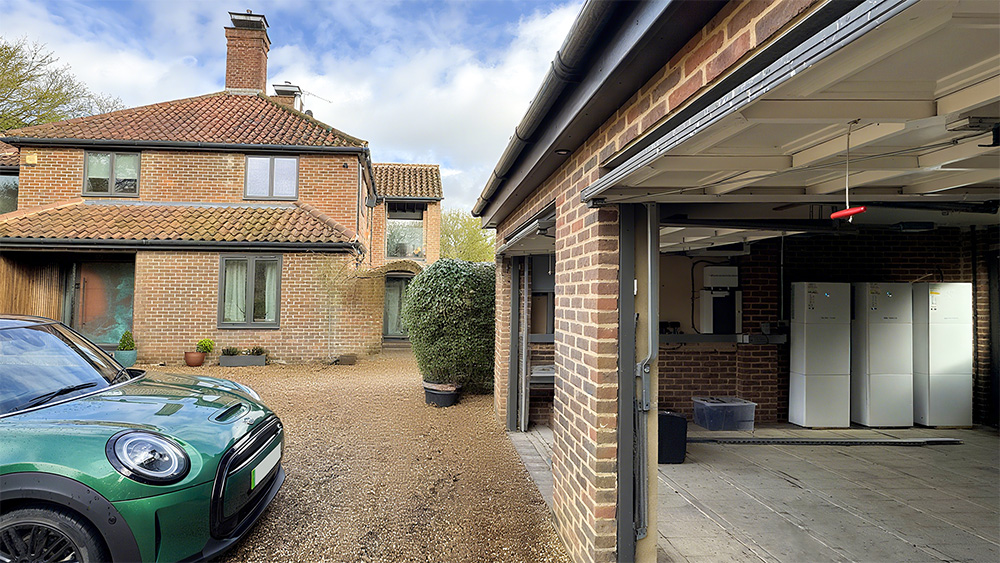
The cost of a home energy storage system in 2025 is shaped by rapid technological advancements, falling battery prices, and increasing deployment across global markets. For solution providers, installers, and energy project stakeholders, understanding pricing trends is essential for system planning and customer positioning. A modern residential energy storage system typically includes battery modules, inverters, and energy management software, with total costs varying based on capacity, configuration, and installation complexity. WHES offers integrated solutions that align with current market expectations for performance, safety, and scalability.
Typical Cost Range and Pricing Structure
In 2025, the installed cost of a home energy storage system generally ranges from $6,000 to $23,000 for residential setups between 5 kWh and 15 kWh . On a per-unit basis, a residential energy storage system typically falls between $250 and $400 per kWh, depending on system design and regional factors . Higher-end configurations, including advanced inverters or backup capabilities, can push costs toward $800–$1,200 per kWh installed . WHES solutions are designed to balance cost and performance, offering competitive configurations suitable for diverse residential project requirements.
Key Factors Influencing System Cost
Several factors determine the final cost of a home energy storage system. Battery chemistry—particularly lithium iron phosphate (LFP)—plays a major role, as it offers a balance of safety, lifespan, and cost efficiency. System size is another key variable; larger-capacity residential energy storage system installations often benefit from better cost efficiency per kWh. Additional components such as inverters, thermal management, and installation services can account for 35–40% of total system cost . WHES integrates these elements into standardized solutions to simplify deployment and improve overall value.
Cost Trends and Long-Term Value
The cost of a home energy storage system continues to decline due to economies of scale and manufacturing improvements. Battery pack prices for stationary storage dropped significantly in 2025, reaching around $70 per kWh at the cell level . As a result, a residential energy storage system is increasingly seen as a long-term investment, with typical payback periods ranging from 7 to 12 years depending on energy usage and tariff structures .
For organizations involved in residential energy solutions, aligning product offerings with these cost trends is essential. WHES continues to develop efficient and scalable systems, supporting the growing demand for reliable and cost-effective residential energy storage.
